Picture a scholar alone in a candlelit study, sometime around 350 BCE, in the city of Athens. The lamp gutters. Around him are rolled papyrus scrolls — lecture notes, drafts, fragments of argument. He is not writing poetry or history or cosmology. He is cataloguing errors. He has grown tired of watching his city's public discourse rot from the inside: men winning arguments not through the clarity of their thinking, but through sleight of hand, through misdirection, through the theatrical manipulation of language. His name is Aristotle, and the work he completes that night — Sophistical Refutations — will become the founding document of the study of logical fallacies.
More than two thousand years later, those same errors appear in parliamentary debates, social media arguments, courtroom rhetoric, and dinner-table disputes. They have new names, new contexts, new digital amplifications — but the underlying patterns Aristotle catalogued remain stubbornly, almost embarrassingly, unchanged. To understand logical fallacies is to hold a lantern up to the machinery of bad reasoning, to see how thought can be made to look like thought without actually being it.
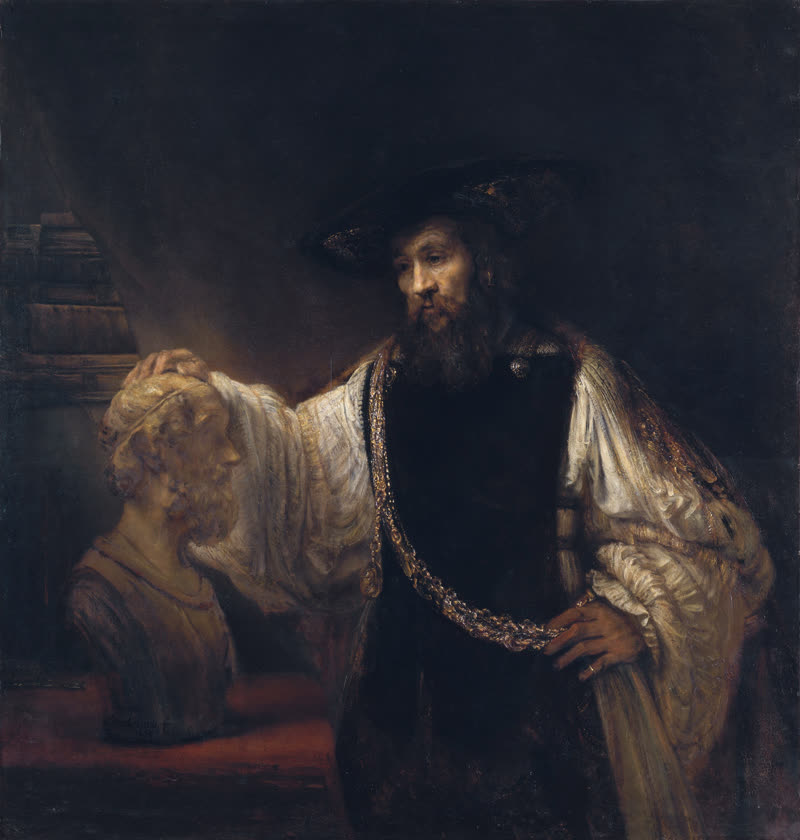
Aristotle and the Sophists: The First Systematic Catalog of Errors
To understand why Aristotle wrote Sophistical Refutations (in Greek: Sophistikoi Elenchoi), one must understand what he was writing against. The sophists were itinerant professional intellectuals who travelled the cities of fifth-century Greece charging handsome fees to teach the art of rhetoric — specifically, the art of winning any argument, on any side, regardless of its truth. For a democracy that settled matters by public debate, this was genuinely corrosive. Young men from wealthy families could purchase the tools to overwhelm even a wise opponent simply by deploying a well-practised logical trap.
Aristotle, the student of Plato and the most systematic mind of his age, was appalled. He sat down and did something no one had done before: he dissected the sophists' tricks, named them, classified them, and showed exactly why each one failed. He insisted, in the text itself, that this was the first work ever written on the subject of deductive reasoning and its deceptions. It was not false modesty — there was no prior catalogue. He was building a new kind of map.
"The art of sophistry is a kind of art of money-making from a merely apparent wisdom, and this is why they aim at a merely apparent demonstration."
— Aristotle, Sophistical Refutations, Book II
In the text, Aristotle divided his thirteen fallacies into two fundamental groups: those dependent on language (in dictionem) — exploiting ambiguity, double meaning, or grammatical confusion — and those independent of language (extra dictionem) — errors of reasoning that would be wrong in any formulation. The six linguistic fallacies included equivocation (using the same word in two different senses), amphiboly (exploiting grammatical ambiguity), composition, division, accent, and figure of speech. The seven non-linguistic fallacies included accident, secundum quid (overgeneralisation), irrelevant conclusion, begging the question, false cause, affirming the consequent, and the fallacy of many questions.
This was not a dry academic exercise. It was, in its time, a political act.
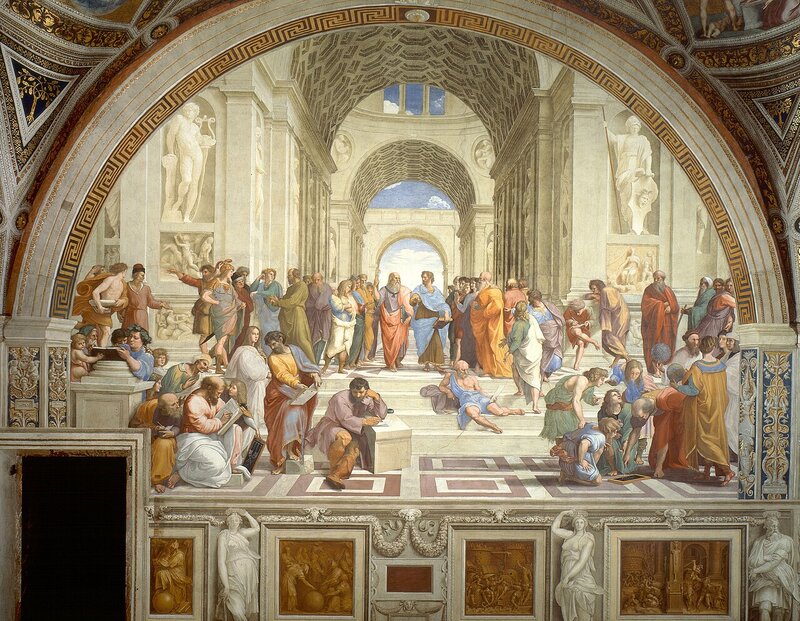
What Are the Most Common Logical Fallacies? A Field Guide
The thirteen fallacies Aristotle named have multiplied considerably in the centuries since. Medieval logicians, Enlightenment philosophers, and modern cognitive scientists have added dozens more to the canon. But a handful recur with such relentless frequency that every careful thinker should be able to recognize them on sight. These are not the abstract concerns of the lecture hall — they appear in every political speech, every corporate press release, every heated exchange between people who believe themselves to be reasoning carefully.
- Ad Hominem — Attacking the person making the argument rather than the argument itself. The classic deflection: "You can't trust her opinion on healthcare — she's never even worked in a hospital." Whether she has or hasn't is irrelevant if her reasoning is sound.
- Straw Man — Misrepresenting an opponent's position as something more extreme or absurd than it actually is, then refuting the distorted version. Richard Nixon's famous 1952 "Checkers speech" deployed this beautifully: accused of misappropriating campaign funds, Nixon spoke instead about a dog he'd been given as a gift and dared his critics to demand he return it — a position his critics had never taken.
- Appeal to Authority — Treating a claim as true simply because an authority figure asserted it. In 1923, American zoologist Theophilus Painter declared — based on flawed data — that humans had 24 pairs of chromosomes. Because of his prestige, this "fact" persisted in textbooks for more than thirty years, even as researchers who counted correctly reported 23 pairs and then quietly deferred to the consensus.
- Slippery Slope — Asserting that one moderate action will inevitably trigger a catastrophic chain of consequences, without demonstrating why that chain is likely. Opponents of women's suffrage in the early twentieth century warned that allowing women to vote would collapse the family unit, corrupt public morality, and ultimately destroy civilisation — an unbroken chain of doom from a single ballot.
- Red Herring — Introducing irrelevant information to distract from the real issue. The term has a pleasingly literal origin: in 1807, English journalist William Cobbett described using a pungent smoked herring to lead hunting hounds off a scent trail, and used the image as a metaphor for the way the press allowed itself to be led away from important stories by irrelevant sensations.
- False Dilemma — Presenting only two options as if they are the only possibilities, when in reality a spectrum of alternatives exists. Senator Joseph McCarthy's red-baiting investigations in 1950s America were built on precisely this architecture: one was either a loyal American or a communist sympathiser, with nothing in between. The entire machinery of the House Un-American Activities Committee presupposed this binary.
What unites these fallacies is not stupidity on the part of those who use them. Many of the most sophisticated minds in history have wielded them knowingly, deliberately, as instruments of persuasion. The fallacy is not always an accidental error — sometimes it is a chosen strategy. Aristotle understood this, which is why he was concerned not only with correcting honest mistakes but with exposing the intentional deceits of the sophists who taught manipulation for profit.
The Grammar of Deception: Why Fallacies Work
It is worth asking a question that textbooks rarely pause to answer: why do logical fallacies work? If these errors in reasoning have been catalogued for over two millennia, why do intelligent, educated people continue to fall for them?
The answer lies in what Aristotle identified as the fundamental mechanism of deception: resemblance. Every fallacy works because it resembles valid reasoning closely enough to pass a quick inspection. The ad hominem feels like relevant evidence because we intuitively know that a person's character can affect the reliability of their testimony. The slippery slope feels logical because chains of cause and effect are real things. The appeal to authority feels reasonable because expertise genuinely does matter. The fallacy is not a complete fabrication — it is a near-truth, a wax copy of good argument, convincing in poor lighting.
This is why the study of informal fallacies is not a matter of learning a list of forbidden moves. It requires the cultivation of something deeper: a habit of slowing down, of asking whether the evidence offered actually supports the conclusion drawn, of noticing when the argument has quietly shifted from the original question to something easier to answer. Critical thinking, in other words, is not a talent. It is a practice, built up through repeated scrutiny of arguments that look sound but aren't.
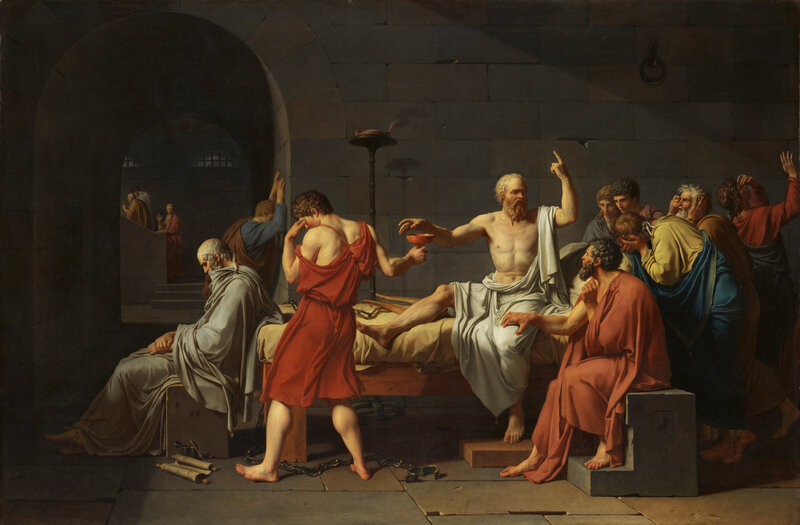
Fallacies in the Archive: The Logic Hidden in Language
The puzzles of The Archivist are built from words — and words, as Aristotle well knew, are the natural habitat of fallacy. His first category of linguistic deception, equivocation, depends entirely on the double life that many words lead: the same sequence of letters meaning one thing in one context, something entirely different in another. Unscramble a word incorrectly and you may produce something that looks like a word but carries a false meaning — the verbal equivalent of a sophisticated refutation.
The vocabulary of philosophy and logic is seeded throughout The Archivist's themed puzzle sets. Words like SOPHIST, RHETORIC, FALLACY, PREMISE, SYLLOGISM, and PARADOX appear not merely as letters to unscramble but as invitations. Each one is a thread: pull it, and you find yourself in a library as old as Western thought, where Aristotle is still sitting at his desk, still cataloguing the ways that language can be made to deceive.
To solve a puzzle is, in its small way, to do what Aristotle did: to look past the surface arrangement, resist the misleading pattern, and find the genuine form underneath.
Why Fallacies Matter More Than Ever
There is a recurring fantasy in the history of ideas that the proliferation of information will, by itself, produce better reasoning. The printing press was supposed to liberate thought from ecclesiastical gatekeeping. The telegraph was supposed to make war unthinkable by connecting distant peoples. The internet was supposed to democratize expertise and let truth compete freely with falsehood on a level field.
In each case, the result has been more complicated. More information has not automatically produced more clarity; it has also produced more sophisticated opportunities for misdirection. The slippery slope and the false dilemma have found new life in the compression of social media, where nuance is expensive and outrage is cheap. The red herring thrives in an environment of infinite scroll, where any uncomfortable question can be buried beneath an avalanche of spectacle. The ad hominem has become a genre.
Aristotle wrote Sophistical Refutations because he believed that the health of a democracy depended on the quality of its public reasoning. The sophists were not simply annoying — they were, in his view, a structural threat to the Athenian experiment. The same argument, one suspects, could be made today with equal force. The names of the fallacies have not changed. The urgency of recognising them has only grown.
This is the quiet wager of every library, every archive, every collection of words and ideas preserved against time: that the examined argument is worth more than the unexamined one, and that the habit of thinking carefully — slow, difficult, occasionally humbling — is among the most important inheritances one generation can leave to the next.